
Commercial overhead doors and operators come in three main types: jackshaft, trolley, and hoist units, each suited to a different door style, ceiling clearance, and duty cycle. Legacy Garage Doors helps Toronto and GTA businesses match the right operator to their building and door configuration.
What Is a Commercial Overhead Door Operator?
A commercial overhead door operator is the motorized system that raises and lowers a sectional, rolling steel, or grille door on command instead of by hand. It replaces manual lifting on doors that open many times a day, which reduces wear on the door and speeds up traffic through a loading dock, warehouse bay, or service entrance. Commercial operators are built for higher cycle counts and heavier doors than the openers used on a residential garage.
The operator connects to the door through one of a few drive methods, and the right method depends on the door type, the ceiling height, and how often the door runs each day. Getting this match right at installation prevents premature motor wear and reduces the number of service calls a business deals with over the life of the door.
What Types of Commercial Overhead Door Operators Are There?
The three main types of commercial overhead door operators are jackshaft, trolley, and hoist units. A jackshaft operator mounts on the wall beside the door and drives the torsion shaft directly, which suits facilities with limited ceiling clearance or overhead obstructions such as sprinkler lines or ductwork.
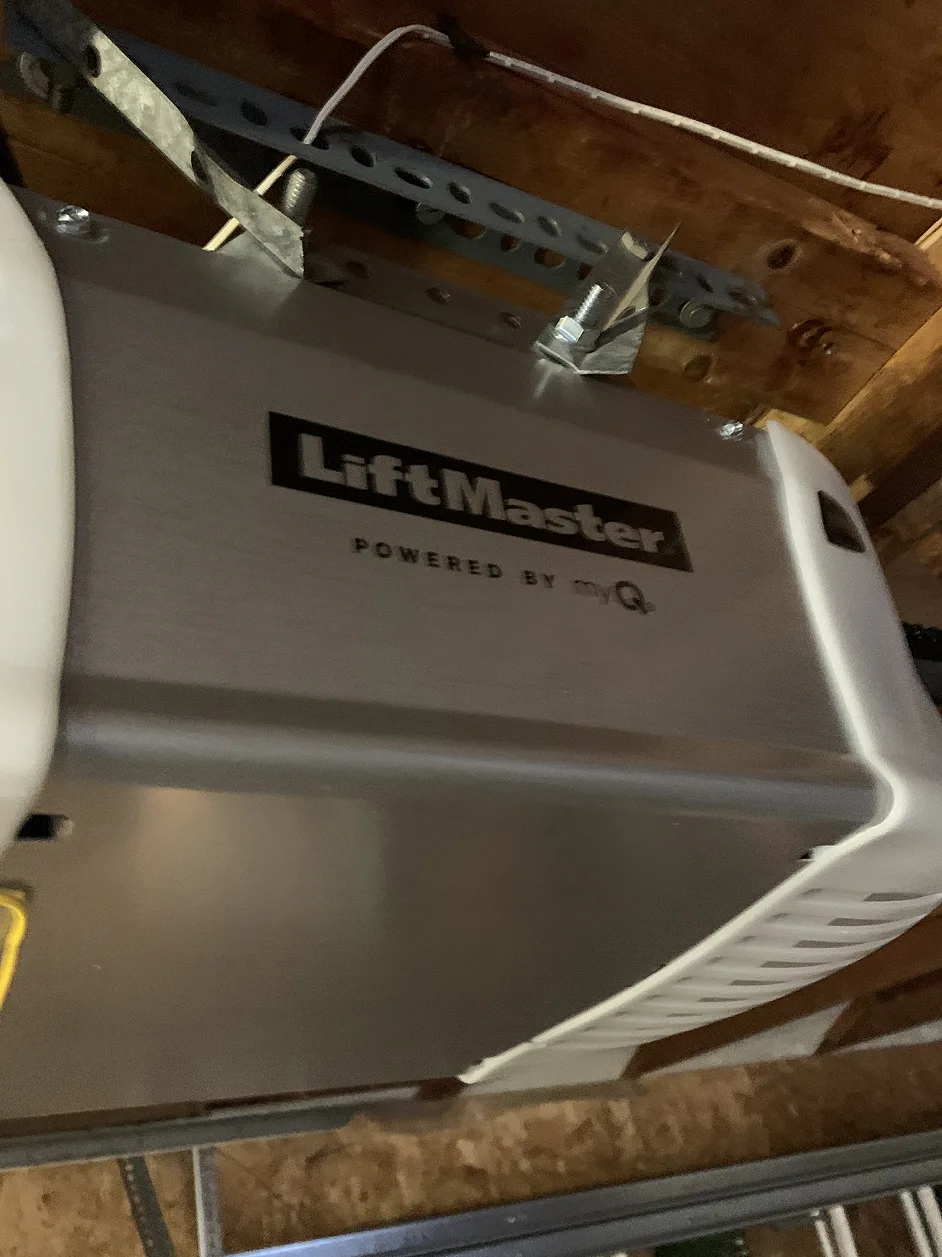
A trolley operator mounts to the ceiling and runs a rail-mounted carriage connected to the top section of the door, which is the standard setup for sectional doors in a typical commercial bay with normal ceiling height. A hoist operator is built for heavier rolling steel doors and high-lift or vertical-lift applications, and it includes a floor-level chain so staff can raise the door by hand during a power outage.
What Drive Systems Do Commercial Operators Use?
Commercial overhead door operators use either a chain drive or a belt drive to move the door along its track. A chain drive connects the motor to the trolley through a metal chain, which handles heavy, high-cycle commercial doors well but runs louder than other options.
A belt drive uses a reinforced belt in place of the chain, giving quieter operation that suits offices, retail backrooms, or any space where noise matters. The choice between chain and belt comes down to door weight, cycle frequency, and how much noise the space can tolerate during operating hours.
What Safety Standards Apply to Commercial Overhead Door Operators?
Commercial overhead door operators sold and installed in Canada are built and tested to CAN/UL 325, the binational standard for door, gate, and window operators. This standard sets requirements for entrapment protection, meaning the operator must stop or reverse if the door contacts an obstruction while closing.
Compliant operators use a combination of sensing edges, photo eyes, or monitored safety devices depending on the door type and how the door is triggered to close. Choosing commercial garage doors and operators that meet this standard protects staff and customers and keeps the installation aligned with Ontario building and fire code requirements.
How Do You Choose the Right Operator for a Commercial Overhead Door?
Choosing the right operator starts with the door type, its weight, and how many cycles it runs per day. A busy loading dock with 20 or more cycles daily needs a heavier-duty trolley or hoist operator, while a lower-traffic service bay can run well on a standard-duty unit.
Ceiling height and available headroom often decide between a trolley and a jackshaft operator, since a jackshaft unit avoids the need for ceiling-mounted rail and hardware. A site visit from the Legacy Garage Doors team confirms door weight, cycle count, and clearance before recommending a specific operator.
How Do GTA Businesses Maintain Commercial Overhead Door Operators?
Commercial overhead door operators need scheduled maintenance to keep entrapment sensors, chains or belts, and limit switches working correctly. A routine check every six months, or more often for high-cycle doors, catches worn drive components before they cause an unplanned shutdown.
Cold weather adds extra strain on exterior-facing doors and their operators, so facilities in Toronto and the GTA benefit from the same seasonal attention given to doors built for harsh Ontario winters, including lubrication before the coldest months and a check of weatherstripping around the opening.
Keeping Your Commercial Overhead Door Running with Legacy Garage Doors
The right commercial overhead door operator keeps a loading dock, warehouse, or service bay moving without daily manual lifting or unexpected downtime. Matching the operator type, drive system, and safety devices to the door and the building is the difference between a system that runs for years and one that needs constant repair. Legacy Garage Doors assesses the door, the space, and the duty cycle before recommending an operator built for that specific commercial application.
Ready to install or upgrade a commercial overhead door operator at your Toronto or GTA property? Contact our team at Legacy Garage Doors for a site assessment and a written quote.
Frequently Asked Questions
1. What is the difference between a jackshaft and a trolley operator?
A jackshaft operator mounts on the wall and drives the door’s torsion shaft directly, which suits low-clearance spaces. A trolley operator mounts to the ceiling and moves the door through a rail-mounted carriage, which is the standard setup for sectional doors in a normal-height commercial bay. A Legacy technician can walk through both options during a site assessment to confirm which fits your building.
2. How many cycles per day can a commercial overhead door operator handle?
Commercial overhead door operators are rated for a specific number of cycles per hour and per day, with standard-duty units built for lighter use and heavy-duty units built for 20 or more cycles daily. The right rating depends on how often the specific door opens and closes during business hours. Businesses with high-traffic bays should review duty cycle requirements with a commercial door specialist before purchasing.
3. Do commercial overhead door operators need a backup for power outages?
Yes, most commercial overhead door operators include a manual release or a hoist chain so staff can open the door by hand during a power outage. Hoist-style operators are built specifically around this floor-level chain backup for heavier rolling steel doors. Properties that cannot afford access delays may also want to discuss battery backup options with their overhead door provider.
4. What safety standard applies to commercial door operators in Canada?
Commercial door operators installed in Canada are built and tested to CAN/UL 325, the binational standard covering door, gate, and window operator safety. This standard requires entrapment protection devices such as sensing edges or photo eyes so the door stops or reverses if it meets an obstruction. Confirming your installation meets this standard is part of a routine safety compliance check.
5. How do I know if my commercial overhead door needs a new operator?
A commercial overhead door usually needs a new operator when it starts reversing without cause, runs noticeably slower, or requires frequent manual resets during the workday. A technician can confirm whether the issue is the operator, the door’s balance, or the track before recommending a replacement. Scheduling a diagnostic service call early prevents a slow operator from becoming a full breakdown.
6. Can one operator work for both sectional and rolling steel doors?
No, sectional and rolling steel doors generally use different operator setups, since rolling doors typically pair with a hoist-style operator while sectional doors commonly use a trolley or jackshaft unit. The right choice always depends on the specific door type, weight, and lift configuration. Legacy Garage Doors can assess your current setup and recommend the correct operator replacement for your door type.
Upgrade Your Commercial Door Operator in Toronto Today
Keep your commercial overhead doors operating safely and efficiently with the right operator system for your business needs. Legacy Garage Doors helps Toronto and GTA businesses select, install, and maintain jackshaft, trolley, and hoist operators based on door type, usage, and building requirements. Contact our team today for a site assessment and a written quote for a reliable commercial overhead door operator solution.
Key Takeaways
- Jackshaft, trolley, and hoist operators are the three main types of commercial overhead door operators, each suited to different clearance and door styles.
- Chain drives handle heavy, high-cycle commercial doors, while belt drives run quieter for noise-sensitive spaces.
- CAN/UL 325 sets the entrapment protection requirements commercial operators must meet in Canada.
- Operator choice should be based on door weight, daily cycle count, and available ceiling clearance.
- Scheduled maintenance every six months, including checks before winter, helps prevent unplanned operator downtime.
- Rolling steel and sectional doors generally require different operator configurations.