
The most common garage door problems include a door that will not open or close, noisy operation, broken springs, worn rollers, and misaligned tracks. Most issues have clear solutions, and Legacy Garage Doors provides same-day diagnosis and repair for Toronto homeowners.
What Are the Most Common Garage Door Problems Homeowners Face?
The most common garage door problems are a door that refuses to open or close, unusual grinding or squeaking noises, a spring failure, misaligned tracks, and a malfunctioning opener. Each of these problems has a specific root cause, and identifying the cause accurately is the first step toward a lasting solution. Toronto homeowners dealing with any of these issues should address them promptly, as delayed repairs almost always result in higher repair costs.
Legacy Garage Doors has diagnosed and resolved thousands of garage door problems across Toronto, Scarborough, Mississauga, Markham, and the broader GTA. The patterns below represent the issues our technicians encounter most frequently, along with the solutions that consistently deliver results.
Why Won’t My Garage Door Open or Close?
A garage door that will not open or close is usually caused by a broken torsion spring, a tripped circuit breaker, a dead opener battery, or photo-eye sensors that are blocked or misaligned. Start by checking the simplest causes first: confirm the opener is plugged in and the wall button is functional. If the motor hums but the door does not move, the spring has likely failed and the door should not be operated manually until a technician inspects it.
Track obstructions and cable failures are also common causes of a door that stops mid-cycle. If the door moves partway and then reverses without touching anything, the opener’s auto-reverse sensitivity may be set incorrectly, or the limit switches may need adjustment. Our garage door services cover all of these causes with same-day availability across Toronto.
What Causes a Noisy Garage Door and How Do You Fix It?
A noisy garage door is caused by worn rollers, loose hardware, dry hinges, or an unbalanced door creating excess vibration. The fix depends on the noise type: grinding points to roller or track friction, rattling suggests loose bolts or panels, and popping or banging usually indicates a spring under abnormal tension. Lubricating the rollers, hinges, and spring with a silicone-based spray is the most effective first step and resolves most noise complaints immediately. DASMA’s garage door opener safety tips confirm that if a door does not reverse readily after contacting an obstruction or operates with unusual resistance, the sensitivity adjustment or underlying hardware should be inspected by a trained technician rather than forced.
If lubrication does not resolve the noise within one or two cycles, the cause is structural rather than friction-based. Worn nylon rollers should be replaced before they damage the track. Our guide on noisy garage doors covers the full diagnostic process by noise type.
How Do Broken Garage Door Springs Affect Operation?
Broken garage door springs are among the most disruptive common problems because a garage door without spring tension is effectively inoperable. The torsion spring above the door carries the weight of the door through every cycle. When it snaps, the door becomes extremely heavy, the opener cannot lift it safely, and the auto-reverse system may engage immediately. A broken spring is identifiable by a loud bang at the moment of failure, often compared to a gunshot.
Spring replacement requires a trained technician with the correct tools and replacement spring rated for the door’s weight and cycle count. Attempting this repair without experience creates a genuine risk of serious injury. As DASMA and the Consumer Product Safety Commission both acknowledge, the issues related to torsion springs are well documented the garage door is typically the largest moving appliance in the home, and its operation requires a high degree of spring tension that demands professional handling. Legacy Garage Doors carries springs for all residential door sizes and handles most spring replacements the same day. See our full breakdown of spring repair for what to expect.
What Happens When a Garage Door Goes Off Track?
A garage door goes off track when a roller dislodges from the track channel, when the track bends after an impact, or when the track hardware loosens enough to allow the door to shift sideways. An off-track door is dangerous to operate and should be stopped immediately. Forcing a door that has jumped its track causes additional panel damage, cable fraying, and potential injury if the door loses support entirely. The CPSC advises homeowners to inspect the garage door and opener every 30 days and to keep the door operating on track at all times to prevent entrapment and structural failures.
Track realignment is a professional repair in virtually all cases. The cause of the original dislodgement must also be addressed, whether that is a bent track segment, a broken roller, or misaligned hardware, otherwise the problem recurs. Our technicians cover alignment problems as part of every off-track service call.
Why Is My Garage Door Opener Not Working?
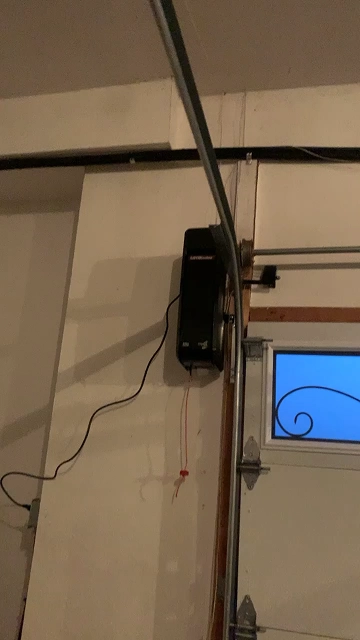
A garage door opener that is not working is most commonly caused by a dead remote battery, a tripped GFCI outlet, a disrupted safety beam, or an internal logic board failure. Begin by replacing the remote battery and testing the wall button independently. If neither works, check whether the outlet the opener is plugged into has a tripped reset button, which is common in garages where outlets share a GFCI circuit.
If power is confirmed but the opener still fails to respond, the photo-eye sensors at the base of the door tracks may be blocked, dirty, or misaligned. Wipe both lenses and confirm the indicator lights on each sensor are steady rather than blinking. Persistent failure after these steps usually indicates an opener that needs professional service or opener replacement depending on the unit’s age.
Which Garage Door Problems Require a Professional?
Garage door problems that require a professional include any issue involving the torsion spring, the cable system, the track when structurally bent, or the opener’s internal wiring. These components operate under high mechanical load or electrical current and carry meaningful injury risk when handled without proper training and tools. The Canadian Centre for Occupational Health and Safety identifies garage door springs as a documented source of workplace and residential injuries.
Problems homeowners can safely address include replacing the opener remote battery, cleaning sensor lenses, lubricating rollers and hinges, and tightening visible loose bolts on hinges and brackets. Everything beyond those tasks is better delegated to a technician. Legacy Garage Doors provides transparent pricing before any repair begins, with no obligation to proceed on the spot.
|
Problem |
DIY Safe? |
Common Cause |
Recommended Action |
|
Door will not open |
Partial |
Dead battery, broken spring |
Check battery first; call pro if spring |
|
Noisy operation |
Yes |
Dry rollers or hinges |
Lubricate with silicone spray |
|
Broken spring |
No |
Cycle fatigue |
Call a professional immediately |
|
Off-track door |
No |
Bent track or loose roller |
Stop using door; call a professional |
|
Opener not responding |
Partial |
Dead battery, sensor issue |
Replace battery, clean sensors |
|
Door reverses unexpectedly |
Partial |
Sensor misalignment or limit switch |
Clean sensors; call pro if persists |
When Common Garage Door Problems Become Urgent
Any garage door problem that involves a safety component, a structural failure, or a door that cannot be secured should be treated as urgent. A door stuck in the open position leaves your home accessible; a door that will not open can trap a vehicle inside. Legacy Garage Doors provides emergency service across Toronto and the GTA for exactly these situations.
Toronto homeowners who are unsure whether their issue is urgent can contact our team for a free phone assessment. Describing the symptom, the noise, and the sequence of events leading to the problem is usually enough for our technicians to advise on whether immediate service is needed or whether the door can be safely left until a regular appointment. Reach our expert team any time for a direct answer.
Frequently Asked Questions
1. What are the most common garage door problems?
The most common garage door problems are a door that will not open or close, broken torsion springs, worn rollers, noisy operation, and a malfunctioning opener. Each problem has a specific cause and a corresponding solution. Identifying the root cause early prevents minor problems from becoming major repairs. Review common garage door issues to understand what symptoms to watch for before they become bigger repairs.
2. How do I know if my garage door spring is broken?
A broken garage door spring usually announces itself with a loud bang at the moment of failure. After that, the door feels extremely heavy when operated manually and the opener motor strains or refuses to lift it. A visible gap in the torsion spring above the door confirms the break. Spring replacement should always be handled by a professional technician. Learn more about spring repair and what the process involves.
3. Can I fix a garage door that won’t close by myself?
You can safely address some causes of a garage door that will not close, specifically a blocked or dirty sensor lens or a misaligned sensor bracket. Wipe both lenses and confirm the indicator light on each sensor is steady. If the door still reverses or will not close after these steps, the cause is beyond a simple DIY fix and requires professional diagnosis. Our Legacy Garage Doors team covers all non-closing door causes with same-day options.
4. How much does it cost to repair common garage door problems in Toronto?
Repair costs in Toronto vary by problem type. Lubrication and minor adjustments are the least expensive. Roller replacement and sensor adjustment fall into a mid-range cost. Spring replacement and opener repair or replacement are higher-cost repairs due to parts and labour requirements. Legacy Garage Doors provides upfront pricing before every job. For a broader cost breakdown, see our repair vs replacement breakdown.
5. Why does my garage door keep reversing before it closes?
A garage door that keeps reversing before it closes is usually caused by misaligned or dirty photo-eye sensors, an obstruction in the door’s path, or an incorrectly set close-force limit on the opener. Clean both sensor lenses and confirm they are pointed directly at each other. If nothing is blocking the beam and the sensors appear aligned, the opener’s limit and force settings may need adjustment by a technician. See our overview of garage door malfunctions for additional causes.
6. Is a noisy garage door a sign of a serious problem?
A noisy garage door is not always a sign of a serious problem, but it is always a signal worth investigating. Squeaking and grinding usually indicate a lubrication issue or worn rollers, both of which are inexpensive to resolve. Banging or popping can indicate a spring under abnormal tension, which is a more serious concern. Addressing noise early prevents the underlying cause from worsening into a mechanical failure. Our maintenance checklist covers what to inspect and how often.
Get Reliable Commercial Door Solutions for Your Business
Keep your facility secure, efficient, and operational with professional commercial door installation, repairs, and preventive maintenance from Legacy Garage Doors. Contact our team to discuss your facility’s requirements and receive a fixed written quote for your commercial door project across Toronto and the GTA.
Key Takeaways
- The most common garage door problems are spring failure, off-track doors, opener issues, noisy operation, and a door that will not open or close.
- Most noise complaints resolve with a lubrication service using a silicone-based spray on rollers, hinges, and the torsion spring.
- Broken springs should never be treated as a DIY repair due to the stored tension involved and the injury risk of mishandling.
- A door that reverses unexpectedly is most often caused by misaligned or dirty photo-eye sensors.
- Off-track doors should be stopped immediately and not operated until a technician inspects the track and roller condition.
- Legacy Garage Doors provides same-day repair across Toronto and the GTA with upfront pricing before any work begins.