
A garage door slowing down usually signals worn rollers, insufficient lubrication, a misaligned track, or a weakening torsion spring. Most causes are straightforward to diagnose, and the team at Legacy Garage Doors can restore safe, full-speed operation for Toronto homeowners the same day.
What Does It Mean When a Garage Door Slows Down?
A garage door slowing down means the door is taking noticeably longer than normal to travel from fully closed to fully open, or is hesitating mid-cycle. This change in speed is a reliable early warning that one or more components are under stress, losing efficiency, or approaching failure. Catching it early protects both the hardware and the people who use the door every day.
Toronto homeowners often overlook a slow door until it stops entirely. Addressing the root cause at the first sign of sluggish movement is always faster and less expensive than an emergency call after a complete breakdown. If your door is taking more than 12 to 15 seconds to fully open, that is a sign worth investigating immediately.
What Are the Most Common Causes of a Garage Door Slowing Down?
The most common causes of a garage door slowing down include insufficient lubrication, worn or damaged rollers, a misaligned track, a weakening torsion spring, or an ageing opener motor. Each of these creates extra resistance or reduces the mechanical advantage the door relies on to move smoothly and consistently at the correct speed.
Is Lack of Lubrication Making Your Garage Door Slow?
Lack of lubrication is the single most common reason a garage door begins moving slowly. Steel rollers, hinges, and the torsion spring all generate friction as they move. When that friction increases due to dry or degraded lubricant, the opener motor has to work harder, and the door slows noticeably. garage door maintenance performed every six months, including a full lubrication cycle using a silicone-based or lithium grease spray, typically resolves this cause within minutes.
Are Worn Rollers Slowing Your Garage Door?
Worn rollers are a leading mechanical cause of a garage door slowing down. Nylon and steel rollers both degrade over time, and once the rolling surface flattens or chips, the roller drags along the track instead of gliding. This increases the load on the opener and produces a noticeably slower, often louder, door cycle. Public Safety Canada notes that Canada has one of the most severe winter climates in the world, and the extreme cold that Toronto homeowners experience each season accelerates wear on mechanical components that operate under sustained friction, including garage door rollers and tracks.
Can a Misaligned Track Cause Your Garage Door to Move Slowly?
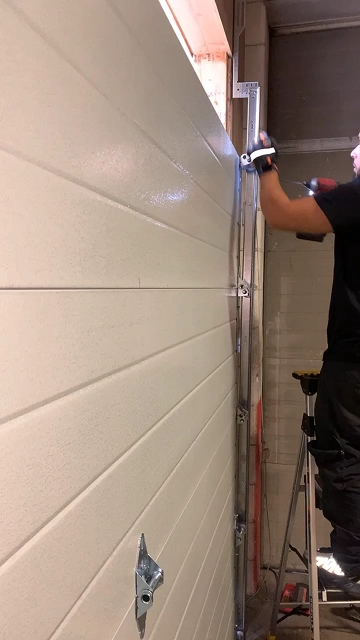
Yes, a misaligned track causes a garage door to slow down because the rollers are forced to push against the track wall instead of riding cleanly inside it. Even a gap of a few millimetres can create enough resistance to reduce door speed by 30 to 50 percent. Track alignment problems are common after minor impacts, foundation settling, or hardware loosening from vibration over time.
Is a Weak Torsion Spring the Reason Your Garage Door Is Slowing Down?
A weakening torsion spring reduces the counterbalance force that offsets the weight of the door. When the spring loses tension, the opener motor carries more of the door’s dead weight on every cycle, causing the door to move more slowly and putting the motor under sustained overload. The Canadian Standards Association notes that torsion springs have a finite cycle life and should be inspected by a qualified technician before failure. A failing spring is a safety risk and should not be treated as a DIY repair.
Can the Opener Motor Cause a Slow Garage Door?
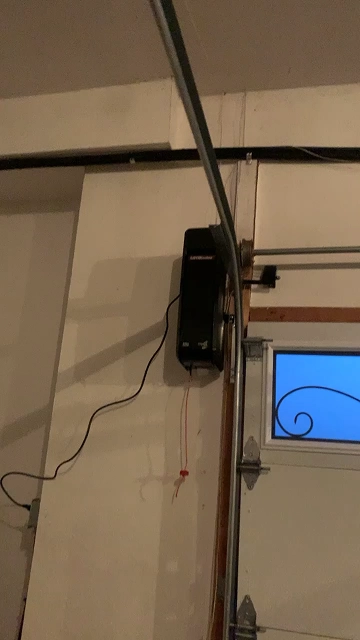
An ageing or undersized opener motor can cause a garage door to slow down, particularly if the motor’s drive mechanism is worn or its internal settings have shifted. Many LiftMaster and other opener models include an auto-force adjustment that recalibrates resistance thresholds over time. When that setting drifts, the opener may intentionally slow the door as a safety measure, misinterpreting normal friction as an obstruction. opener replacement is often the most cost-effective solution when a motor is more than 10 to 15 years old.
How Does Cold Weather in Toronto Affect Garage Door Speed?
Cold weather causes garage doors to slow down because metal components contract, lubricants thicken, and rubber seals stiffen in low temperatures. Toronto winters regularly push temperatures below minus 15 degrees Celsius, which is cold enough to cause steel tracks to tighten around rollers and reduce clearance on both sides. Thick or dried-out grease in the spring and roller channels becomes almost solid in these conditions, adding significant drag.
Preparing your door for winter with the right lubricants and a rubber bottom seal inspection prevents most cold-weather slowdowns. Silicone-based sprays remain fluid at low temperatures while petroleum-based grease solidifies, so using the correct product for the Canadian climate matters. If your door has begun moving slowly only in cold months, this is the most likely explanation. Environment and Climate Change Canada notes that the GTA experiences an average of 130 days per year with temperatures at or below freezing, making seasonal preparation a practical necessity rather than an optional step.
Which Cause of a Slow Garage Door Is Most Urgent to Fix?
Not every cause of a slow garage door carries the same urgency. The table below ranks the most common causes by severity and recommended response timeline so homeowners can prioritise correctly.
|
Cause |
Severity |
DIY Safe? |
Recommended Timeline |
|
Lack of lubrication |
Low |
Yes |
Address within 1 week |
|
Worn rollers |
Moderate |
Yes (nylon only) |
Address within 2 to 4 weeks |
|
Misaligned track |
Moderate to High |
No |
Address within 1 to 2 weeks |
|
Weak torsion spring |
High |
No |
Address immediately |
|
Ageing opener motor |
Moderate |
Partial |
Address within 1 month |
|
Cold weather / seasonal |
Low to Moderate |
Yes (lubrication) |
Preventive action before winter |
How Can You Diagnose Why Your Garage Door Is Moving Slowly?
Diagnosing a slow garage door starts with a basic visual and mechanical inspection you can do safely from ground level. Disconnect the opener by pulling the red emergency release cord, then manually lift the door halfway and let go. A properly balanced door stays in place; a door that falls or shoots upward has a spring tension problem that requires a technician. If the door stays in position, the spring is likely not the primary issue.
Next, listen and observe as you cycle the door with the opener reconnected. A grinding or scraping noise during a slowdown points to track or roller friction. A whirring or straining motor sound without mechanical resistance points to the opener itself. Run a visual check on rollers for flat spots, on tracks for bends or gaps, and on the spring for visible cracking or separation. If you see any structural damage, contact Legacy Garage Doors before operating the door further.
If your inspection leaves any uncertainty about the cause, the safest next step is a professional assessment. Legacy Garage Doors offers straightforward, transparent diagnoses for Toronto homeowners with no pressure to commit to repairs on the spot. Reach out to our expert team and we will identify the cause accurately and give you a clear, upfront quote for the repair.
What Are the Risks of Ignoring a Slow Garage Door?
Ignoring a garage door slowing down creates three distinct risks: mechanical failure, safety hazard, and increased repair cost. A door that moves under abnormal strain is accelerating wear on every component it contacts. What begins as a slow door from worn rollers can progress to a broken cable, a snapped spring, or a burnt-out opener motor if left unaddressed for several months.
The safety risk is the most serious concern. A garage door moving slowly due to spring tension loss can reverse direction without warning or fail to hold in the open position, creating a crush risk for vehicles, pets, and people. The auto-reverse sensors built into modern openers are designed to detect obstructions, not spring failures, so they cannot substitute for a properly balanced and tensioned door. Homeowners who notice their garage door issues worsening over a short period should treat it as a priority, not a deferred item.
When Should You Call a Professional for a Slow Garage Door in Toronto?
You should call a professional for a slow garage door in Toronto when the cause involves the torsion spring, the cable, the track, or the opener motor. These are the four components where amateur repair attempts create a meaningful risk of injury. Torsion springs store hundreds of pounds of tension, and a mishandled spring can cause serious injury or property damage if it releases suddenly.
Even for causes that appear minor, such as a stuck roller or a misaligned track segment, professional diagnosis ensures the full picture is assessed rather than just the visible symptom. Toronto homeowners using residential garage doors in attached garages should be especially careful, as a door failure in an enclosed space creates additional risk. Legacy Garage Doors provides same-day service across Toronto, Scarborough, Mississauga, and the broader GTA.
For immediate concerns, the City of Toronto notes under its building permit requirements that structural and material alterations to building components, including attached garages, are subject to Ontario Building Code compliance, which is why professional service is the appropriate path for mechanical repairs to garage door systems.
A Slow Garage Door Deserves a Fast Answer
A garage door slowing down is rarely a problem that resolves on its own. The most common causes, from dry rollers and worn springs to track misalignment and motor wear, all follow the same pattern: they worsen under continued use until the door stops entirely or fails in a way that creates a safety risk. Catching the issue early and addressing it with accurate diagnosis saves time, money, and frustration.
Legacy Garage Doors has served Toronto homeowners with honest assessments and transparent pricing since the business was founded on the principle that customers deserve to know exactly what is wrong and what it will cost to fix it. Whether your door needs a quick lubrication service or a full spring replacement, the process starts with a straightforward conversation.
Ready to Get Your Garage Door Moving Properly Again?
Legacy Garage Doors provides prompt, professional service across Toronto and the Greater Toronto Area, including same-day availability for urgent repairs. Our technicians arrive with the parts, tools, and experience to diagnose and resolve the cause of a slow garage door accurately on the first visit. Contact our expert team today to schedule a visit, and we will restore your door to safe, full-speed operation with upfront pricing and no surprise charges.
Frequently Asked Questions
1. Why is my garage door suddenly moving slower than usual?
A sudden slowdown usually points to one of three causes: the lubricant on your rollers, spring, or hinges has dried out; a torsion spring has partially lost tension; or the opener motor is compensating for increased mechanical resistance. If the slowdown happened quickly rather than gradually, inspect the spring for visible damage and check the tracks for recent impact or bending. When in doubt, contact Legacy Garage Doors for a same-day assessment.
2. Can I fix a slow garage door myself?
You can safely address some causes of a slow garage door yourself, specifically lubrication and nylon roller replacement. Both are low-risk maintenance tasks that require basic tools and the correct lubricant product. However, repairs involving the torsion spring, cable, track, or opener motor should always be handled by a trained technician. These components operate under high tension or electrical load and carry a real injury risk when handled without proper training. Our maintenance checklist covers what homeowners can safely handle themselves.
3. How long should a garage door take to open?
Most residential garage doors take between 10 and 15 seconds to travel from fully closed to fully open at their normal operating speed. Doors wider than 16 feet or heavier steel and wood models may take slightly longer. If your door consistently takes more than 18 to 20 seconds, or if it slows noticeably partway through the cycle, it is operating outside its designed speed range and likely has a mechanical cause that needs attention. Explore common garage issues for a broader breakdown of performance problems homeowners encounter.
4. Does cold weather cause garage doors to slow down in Toronto?
Yes, cold weather causes garage doors to slow down in Toronto because metal components contract and lubricants thicken below freezing. The GTA regularly experiences temperatures cold enough to cause significant friction increases in steel tracks and roller channels. Using a silicone-based lubricant rated for cold climates, inspecting the rubber bottom seal before winter, and ensuring the spring tension is correctly set before the cold season are the most effective preventive measures. Seasonal guidance on door insulation for additional ways to protect your door against Canadian winters.
5. Is a slow garage door a safety risk?
Yes, a slow garage door can represent a safety risk depending on the cause. If the door is slow because of a weakening torsion spring, the spring may fail suddenly, causing the door to fall without warning. If the cause is motor-related, the auto-reverse function may not perform reliably. Any door that moves inconsistently, hesitates, or reverses unpredictably should be treated as a safety concern and inspected promptly. Legacy Garage Doors provides emergency service for urgent issues across Toronto and the broader GTA.
6. How much does it cost to fix a slow garage door in Toronto?
The cost to fix a slow garage door in Toronto depends on the cause. A lubrication service is generally the least expensive option. Roller replacement, track realignment, and opener adjustments fall into a mid-range cost. Torsion spring replacement is the highest-cost common repair due to the complexity and safety requirements involved. Legacy Garage Doors provides upfront pricing before any work begins so Toronto homeowners know exactly what they are committing to. Review the GTA cost breakdown for a broader look at what repairs and replacements typically cost in the area.
Key Takeaways
- A garage door slowing down is an early warning sign that at least one mechanical component is under abnormal stress.
- The most common causes are lack of lubrication, worn rollers, misaligned tracks, a weakening torsion spring, or an ageing opener motor.
- Cold Toronto winters accelerate all mechanical wear and can cause even well-maintained doors to slow down seasonally.
- Torsion spring and cable repairs should never be attempted without professional training due to the stored tension involved.
- A door that slows suddenly rather than gradually is more likely to have a structural cause than a maintenance cause.
- Most causes of a slow garage door become more expensive and more dangerous if ignored for more than a few weeks.
- Legacy Garage Doors provides same-day service across Toronto, Scarborough, Mississauga, and the broader GTA with upfront, transparent pricing.