
A garage door that won’t close all the way or reverses before closing is usually caused by one of five issues: misaligned or dirty safety sensors, incorrect limit switch settings, an obstruction in the door’s path, worn rollers or a track problem, or a faulty logic board. Most causes can be identified in under five minutes if you know where to look.
Why Does a Garage Door Reverse Before Closing?
A garage door that reverses during closing is responding to a signal that tells it something is wrong. Modern garage doors are designed to reverse automatically when the opener detects resistance, a sensor is triggered, or the door reaches a position the logic board does not recognise as correct. This safety behaviour prevents the door from closing on a person, animal, or object, but it also activates when the underlying problem is a mechanical or sensor issue rather than an actual obstruction.
Legacy Garage Doors treats closing failures as priority service calls because a door stuck open is a security and weather exposure risk. Homeowners dealing with an urgent closing failure can access emergency repair service directly while troubleshooting the cause.
What Are the Most Common Causes of a Garage Door That Will Not Close?
Misaligned or Dirty Safety Sensors
Safety sensors are mounted near the bottom of the door tracks on each side of the opening. They project an infrared beam across the opening, and if anything interrupts that beam during closing, the opener reverses. This auto-reversal behaviour is not a flaw, it is a requirement under the federal safety standard that has governed all residential garage door openers manufactured since 1993. Sensors that are physically knocked out of alignment, coated in dirt or cobwebs, or whose indicator lights are not matching (one solid, one flashing) will trigger a false reversal. Cleaning the sensor lenses with a dry cloth and re-aligning the brackets so both indicators show solid lights resolves the majority of sensor-related closing failures. A full guide to sensor problems covers the diagnostic and correction steps in detail.
Incorrect Limit Switch Settings
The limit switches on the opener tell the motor how far to travel before stopping. A down-limit switch set too high causes the door to reverse before it reaches the floor because the opener interprets the floor contact as an obstruction. Adjusting the down-limit screw on the motor unit by small increments corrects this. The exact location and adjustment method for limit screws varies by opener brand and model.
Obstruction in the Door Path
Any object in the path of the door, including tools, storage items, or debris on the floor, will trigger the safety reversal. Check the full width of the door path including the area immediately in front of the bottom seal, which is where small items are most frequently missed.
Worn Rollers, Bent Track, or Binding Hardware
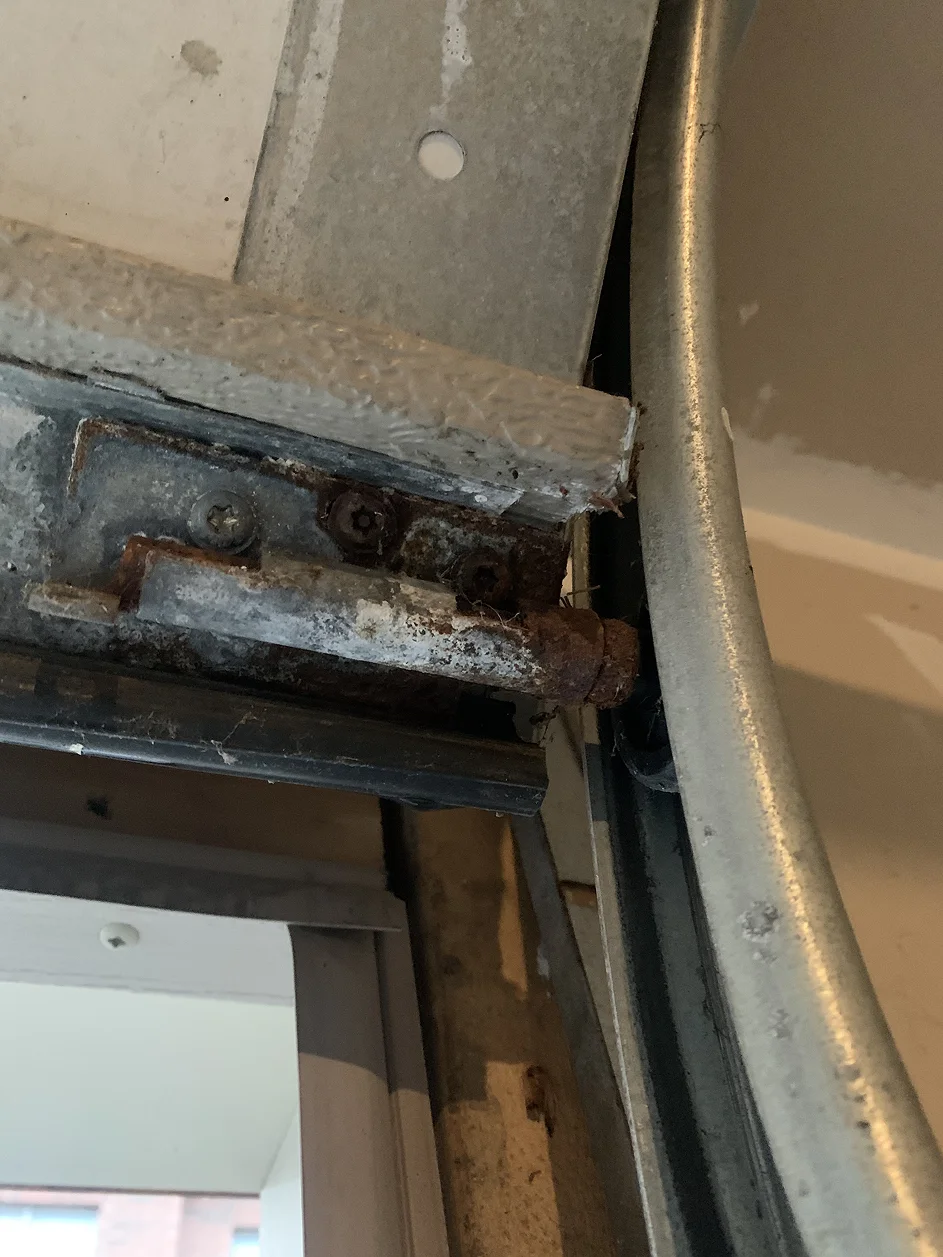
If the door binds, drags, or produces resistance at a specific point in its travel, the opener will interpret that resistance as an obstruction and reverse. Worn rollers, a bent track section, or misaligned hardware can all create this friction. Legacy Garage Doors diagnoses track and hardware issues as part of the garage door services team’s standard repair visit. The alignment problems resource covers track-related closing issues in detail.
Faulty Logic Board or Opener
If sensor alignment, limit settings, and the track are all confirmed correct and the door still reverses, the logic board in the opener may have developed a fault. A logic board that is sending incorrect reversal commands cannot be corrected through adjustment. Referencing your opener’s diagnostic error codes can help identify whether a board fault is the source before calling for service. Opener replacement is the resolution in this case. Legacy Garage Doors assesses opener logic boards as part of the opener replacement service.
How to Check Your Sensors in Under Two Minutes
- Look at both sensor units mounted near the floor on each side of the opening.
- The sending sensor (typically yellow indicator) should show a solid light. The receiving sensor (typically green indicator) should also show a solid, steady light.
- If either indicator is off, flickering, or blinking, the sensors are not aligned or the beam is obstructed.
- Loosen the wing nut or bracket screw on the misaligned sensor, reposition it so both indicators show solid, then retighten.
- Clean both sensor lenses with a dry cloth to remove dust and debris.
- Test the door. If it still reverses, move to limit switch adjustment or call Legacy Garage Doors for a diagnosis.
What If the Door Goes Down Partway Then Stops Without Reversing?
A door that stops mid-travel without reversing is a different problem from one that actively reverses. Partial closing followed by a stop and no movement is typically caused by a broken cable or spring, a detached trolley arm, or a power interruption to the opener. Check whether the motor unit is powered and whether any spring or cable components are visibly damaged before calling for service.
Broken cables or springs in this state mean the door is under unbalanced mechanical load and should not be operated manually until inspected. Legacy Garage Doors provides same-day assessment for stopped-door situations. The cable repair guide covers what to do if a cable failure is the cause.
Get Your Garage Door Closing Correctly Again
Legacy Garage Doors diagnoses and repairs closing failures across Toronto and the GTA, including sensor misalignment, limit switch adjustment, track and hardware issues, and opener faults. Every repair is quoted in writing before work begins. Contact Legacy Garage Doors to arrange a same-day or next-day service visit.
Frequently Asked Questions
1. Why does my garage door close halfway then go back up?
This is the most common form of the reversal issue and is usually caused by a misaligned safety sensor or an incorrect down-limit setting. Check both sensor indicator lights first. If both show solid, adjust the down-limit screw on the motor unit by a quarter-turn increments downward. If the problem persists, contact Legacy Garage Doors for a diagnostic visit.
2. Can I override the safety sensors to force the door to close?
Most openers allow a manual close by holding the wall button continuously while the door travels down, bypassing the sensor reversal. This should only be used temporarily when a sensor fault has been confirmed and the path is visually clear. It is not a long-term fix. Sensor issues should be resolved properly to maintain the full safety function of the door system. Legacy Garage Doors’ commercial garage doors team can help resolve persistent sensor faults properly.
3. How do I know if my garage door opener needs replacing versus adjusting?
If sensor cleaning, limit adjustment, and track inspection have all been completed and the door still reverses or fails to close, the logic board in the opener is the likely fault. A logic board fault cannot be corrected through adjustment. Legacy Garage Doors assesses whether repair or replacement is the right resolution through our residential doors and commercial teams.
4. Does cold weather cause garage doors to reverse?
Yes. Cold weather increases friction in the rollers, thickens lubricants, and can cause the door bottom seal to stick to the floor surface. This added resistance may exceed the opener’s force threshold and trigger a reversal. Annual maintenance including lubrication of rollers and hinges significantly reduces cold-weather reversal issues. Our Legacy technicians follow strict maintenance standards to keep your door operating reliably through every Ontario season.
5. How much does it cost to fix a garage door that will not close?
If the issue is sensor misalignment or limit adjustment, a service call and adjustment typically costs between $80 and $150. If the cause is a hardware or track issue, repair costs depend on the specific component. If opener replacement is required, installed costs start from $300. Legacy Garage Doors provides a written quote after the on-site diagnosis. Review our garage door repair resource for a broader cost overview.
Key Takeaways
- A garage door that reverses before closing is responding to a resistance or sensor signal, not always an actual obstruction.
- The five most common causes are sensor misalignment, incorrect limit switch settings, a physical obstruction, binding hardware, and a logic board fault.
- Sensor diagnosis takes under two minutes: check that both indicator lights show solid and clean the sensor lenses.
- A door that stops mid-travel without reversing is a different problem and may indicate a broken cable or spring.
- Cold weather increases roller friction and can trigger false reversals; annual lubrication reduces this significantly.
- Sensor and limit adjustments typically cost $80 to $150; logic board faults require opener replacement from $300 installed.