
A garage door that has come off its track is a safety hazard and should not be operated until it has been professionally inspected and repaired. The most common causes are impact damage, worn rollers, broken cables, and misaligned track sections. Legacy Garage Doors repairs off-track garage doors for residential and commercial properties across Toronto and the Greater Toronto Area, typically on the same day.
What Does It Mean When a Garage Door Is Off Track?
A garage door operates on a pair of metal tracks mounted on either side of the door opening, one running vertically along the wall and one running horizontally along the ceiling of the garage. The door’s rollers travel inside these tracks and keep the door moving in a straight, controlled path as it opens and closes.
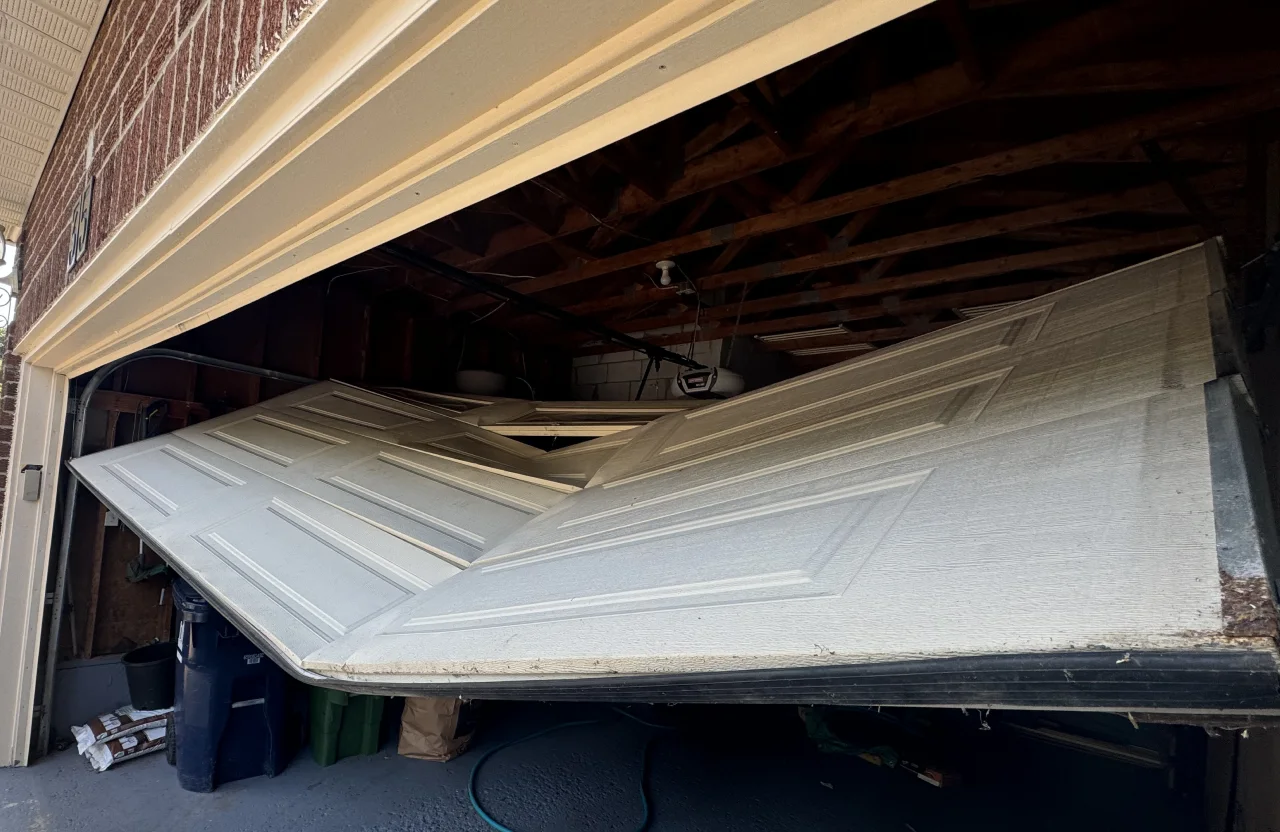
When a garage door comes off track, one or more of the rollers have exited the track channel. The door is no longer guided and can shift sideways, bind against the frame, or in more serious cases drop partially or fully out of the opening. The door cannot operate safely in this condition regardless of whether it is moved manually or by the opener.
Off-track failures range from a single roller that has slipped out of the track on one side to a complete derailment where the door has separated from the track system on both sides. Both require professional attention before the door is used again. Our garage door issues overview covers the most common mechanical failures affecting GTA residential and commercial doors.
What Causes a Garage Door to Come Off Track?
A garage door does not come off its track without a cause. In most cases the underlying problem is identifiable and can be corrected as part of the repair. Understanding the cause also helps prevent a recurrence after the door is realigned.
|
Cause |
How It Leads to Derailment |
Common In |
|
Vehicle or object impact |
Direct force bends the track or knocks rollers out of the channel in a single event |
Garages with tight clearance |
|
Worn or broken rollers |
Rollers worn flat or cracked no longer seat correctly in the track and eventually slip out |
Doors over 7 to 10 years without maintenance |
|
Snapped lift cable |
When a cable fails, one side of the door drops unevenly and the rollers on that side exit the track |
Any door age; more common with worn springs |
|
Bent or misaligned track |
A track section that is bent, loose, or shifted forces the rollers out at the deformation point |
Impact damage or loose mounting hardware |
|
Broken torsion spring |
A failed spring removes the counterbalance and the door drops unevenly under its own weight |
Doors with springs at end of service life |
|
Obstruction in the track |
Debris, ice, or a foreign object in the track channel blocks roller travel and forces the roller out |
Toronto winters; infrequently inspected doors |
|
Loose track mounting hardware |
Track sections that have shifted out of alignment over time create gaps or offsets where rollers exit |
Older installations with original hardware |
Many off-track failures are preceded by warning signs including unusual noises, uneven door travel, and visible gaps between the roller and track wall. Catching these signs early during routine maintenance prevents a partial issue from becoming a full derailment. Our garage door maintenance checklist covers roller and track inspection as part of the standard annual service.
Is It Safe to Use a Garage Door That Is Off Track?
No. A garage door that has come off its track must not be operated, either manually or with the opener, until it has been professionally inspected and repaired. This applies even if the door appears to be only slightly misaligned or if only one roller has exited the track.
An off-track door is under uneven stress. The panels, hinges, cables, and remaining rollers are bearing load in ways they are not designed to handle. Operating the door in this state can cause the derailment to worsen, bend or crack additional panels, damage the opener trolley, snap the remaining cable, or cause the door to drop suddenly into the opening. DASMA’s own safety guidance specifically warns that a garage door that does not travel smoothly may indicate an unsafe condition, and recommends a professional inspection rather than continued use
A garage door weighs between 130 and 350 pounds for a standard residential model. If the door drops or shifts while someone is beneath or beside it, the risk of serious injury is significant. Do not attempt to push, pull, or lift the door back into the track yourself before the underlying cause has been identified and the hardware has been checked.
What Should You Do Immediately If Your Garage Door Comes Off Track?
The steps below are intended to make the situation safe while you wait for a professional. They are not a repair procedure.
- Stop using the door immediately. Disconnect the opener by pulling the red emergency release cord so the opener cannot be activated accidentally while the door is in a compromised state.
- Do not park a vehicle under or near the door opening. An off-track door can shift or drop without warning.
- If the door is partially open and you need to secure the garage, prop the door in place using a sturdy object such as a wooden board wedged under the bottom corners. Do not rely on the opener or the track to hold the door open.
- Do not attempt to bend the track back into position yourself. Track metal fatigues when bent and rebent, and a track repaired this way may fail again during the next operation cycle.
- Contact a qualified garage door technician for same-day service. Legacy Garage Doors provides emergency response for off-track door failures across Toronto and the GTA.
For urgent off-track situations, contact Legacy Garage Doors directly to arrange same-day or emergency service at your property.
How Is an Off-Track Garage Door Repaired?
The repair process for an off-track garage door depends on the cause and the extent of the derailment. A single roller that has slipped out of the track on one side with no associated hardware damage is a straightforward repair. A full derailment involving a bent track, broken cable, and damaged panels requires more extensive work.
Roller Replacement and Realignment
Worn or broken rollers are replaced and the door is carefully guided back into the track. The technician checks that all rollers seat correctly and that the door travels smoothly through the full range of motion before the repair is considered complete.
Track Realignment or Replacement
If the track has been bent by impact or has shifted out of alignment due to loose mounting hardware, the affected section is straightened or replaced and the mounting brackets are tightened and checked. The gap between the track and the roller wheel is adjusted to the manufacturer’s specification.
Cable and Spring Inspection
When a cable or spring failure caused or contributed to the derailment, these components are replaced as part of the same visit. DASMA’s own code inspection guidance warns that components under spring tension should only be visually inspected and never touched, since they remain under extreme mechanical tension even when the door appears stationary. This is also why professionals reference broader hazardous energy control principles when working on a door with a failed spring or cable, since the stored energy in the system doesn’t disappear just because the door has stopped moving.
Panel Assessment
If the off-track event involves vehicle impact or a significant drop, the technician assesses each panel for bending, cracking, or hinge damage. Panels that are structurally compromised affect the door’s ability to seal and operate correctly and may need replacement.
Can a Garage Door Come Off Track Again After Repair?
A correctly repaired off-track door with the underlying cause addressed should not come off track again under normal use. The risk of recurrence is higher when the underlying cause is not fully identified or when the repair addresses only the visible symptoms without checking the condition of related hardware.
For example, replacing a roller that has exited the track without checking the condition of the remaining rollers on the same door leaves the door at risk of a repeat failure from the next worn roller to fail. Legacy Garage Doors technicians inspect the full door system as part of every off-track repair, not only the point of immediate failure.
Scheduling annual professional maintenance after a track repair reduces the risk of recurrence and catches wear in rollers, cables, springs, and track hardware before it leads to another failure. Our how often to service your garage door overview covers the recommended service intervals for Toronto residential and commercial doors.
How Much Does Off-Track Garage Door Repair Cost in Toronto?
The cost of repairing an off-track garage door in the GTA depends on the cause and scope of the repair required. A straightforward roller replacement and realignment without associated hardware damage typically runs $150 to $250. If the track requires straightening or partial replacement, the cost rises to $200 to $400. When a cable or spring failure causes the derailment and those components also require replacement, the total repair cost reflects both the track work and the cable or spring repair.
Legacy Garage Doors provides upfront pricing before any work begins, with no hidden fees added after the fact. For a broader overview of what common garage door repairs cost in Toronto, our blog on garage door repair vs replacement provides useful context on how to evaluate repair costs relative to door age and condition.
Get Your Off-Track Garage Door Repaired Today
Legacy Garage Doors repairs off-track garage doors for residential and commercial properties across Toronto, Scarborough, Markham, Vaughan, Mississauga, and the broader GTA. Same-day and emergency service available. Contact Legacy Garage Doors to arrange a visit or get an upfront quote.
Frequently Asked Questions
1. Can I fix a garage door off track myself?
Attempting to push a garage door back onto its track without identifying and addressing the underlying cause is not recommended and can worsen the damage. If a spring or cable failure caused the derailment, there is stored mechanical energy in the spring system that poses a serious injury risk. Even in simpler cases, a DIY realignment without checking roller condition, track alignment, and cable tension often results in a repeat failure. Our overview of the dangers of DIY garage door repair explains why track and spring repairs specifically require professional tools and training.
2. How long does an off-track garage door repair take?
Most residential off-track repairs are completed within one to two hours when the cause is limited to worn rollers, minor track misalignment, or a single cable failure. More complex repairs involving panel replacement, full track replacement, or both a cable and spring failure take longer. Legacy Garage Doors technicians carry common replacement parts on their vehicles to complete most repairs in a single visit. Our overview of how long garage door installation takes provides timing context for different types of door work.
3. What happens if I run the opener with the door off track?
Running the opener with the door off track forces the trolley and drive mechanism to pull against a door that is not moving correctly. This can damage the opener trolley, strip the drive gear, bend the door further out of alignment, and in severe cases cause the door to drop or shift violently. If the opener was running when the door derailed, disconnect it using the emergency release cord and leave it disconnected until the track repair is complete.
4. Why does my garage door keep coming off track?
A garage door that comes off track repeatedly has an underlying cause that has not been fully addressed. The most common reasons for recurrence are worn rollers that were not all replaced during the initial repair, a track section that was bent back rather than replaced, loose mounting hardware that allows the track to shift again over time, or a spring system that is at end of life and creating uneven load on the cables and rollers. A full system inspection identifies which components need attention. Our garage door issues overview covers the recurring failure patterns our technicians see most often in the GTA.
5. Is an off-track garage door covered by home insurance in Canada?
Coverage depends on the cause and the terms of your specific policy. Off-track damage caused by a vehicle impact may be covered under your home insurance or your auto insurance depending on the circumstances. Damage resulting from normal wear and lack of maintenance is generally not covered. Contact your insurance provider to confirm coverage before scheduling repairs, and ask the technician for a written assessment of the cause to support any claim.
6. How do I know if my garage door track is bent?
Visually inspect the full length of both vertical and horizontal track sections with the door closed. A bent section will show a visible kink, curve, or offset that is not present in the rest of the track. You may also notice that the door hesitates or makes a grinding sound at a specific point during travel, which often corresponds to where the track is deformed. A technician can confirm the extent of the damage and advise on whether the section can be straightened or needs to be replaced. Our garage door alignment problems overview covers track and alignment inspection in detail.
Key Takeaways
- A garage door off track is a safety hazard. Do not operate the door manually or with the opener until it has been professionally repaired.
- The most common causes are vehicle impact, worn or broken rollers, snapped cables, broken springs, bent track sections, and debris or ice in the track channel.
- Disconnect the opener using the emergency release cord immediately after the derailment to prevent accidental activation while the door is compromised.
- A correct off-track repair addresses the underlying cause, not only the point of visible failure. All rollers, cables, springs, and track sections should be inspected as part of the repair visit.
- Recurring off-track failures indicate an underlying cause that was not fully resolved during the previous repair.
- Legacy Garage Doors provides same-day and emergency off-track repair across Toronto, Scarborough, Markham, Vaughan, Mississauga, and the broader GTA with upfront pricing and no hidden fees.