
Securing a garage door involves a combination of physical hardware upgrades, smart technology, proper maintenance, and habit changes that collectively reduce the risk of break-ins and unauthorised access. Legacy Garage Doors helps Toronto and GTA homeowners identify and address garage door security vulnerabilities through professional assessment, hardware upgrades, and reliable repair and maintenance services.
Why Is Garage Door Security Important for Toronto Homeowners?
The garage is one of the most common entry points targeted in residential break-ins. Statistics Canada’s most recent police-reported crime data shows breaking and entering remains the most severe property crime category nationally, with over 109,000 incidents reported in 2025. An attached garage gives an intruder direct access to the interior of the home once the door between the garage and the living space is breached.
In Toronto and the GTA, where a large proportion of detached and semi-detached homes have attached garages, securing the garage door is a meaningful part of overall home security. Many homeowners focus on window locks, deadbolts, and alarm systems while overlooking the garage entirely.
A garage door that is poorly maintained, uses outdated technology, or lacks basic security features is a weak point in an otherwise well-secured home. Our residential garage doors service covers security-focused hardware upgrades and replacements for Toronto homeowners.
What Are the Most Effective Ways to Secure a Garage Door?
Garage door security works in layers. No single measure is foolproof, but combining several of the steps below significantly reduces the risk of forced or covert entry through the garage.
Upgrade to a Rolling Code Opener
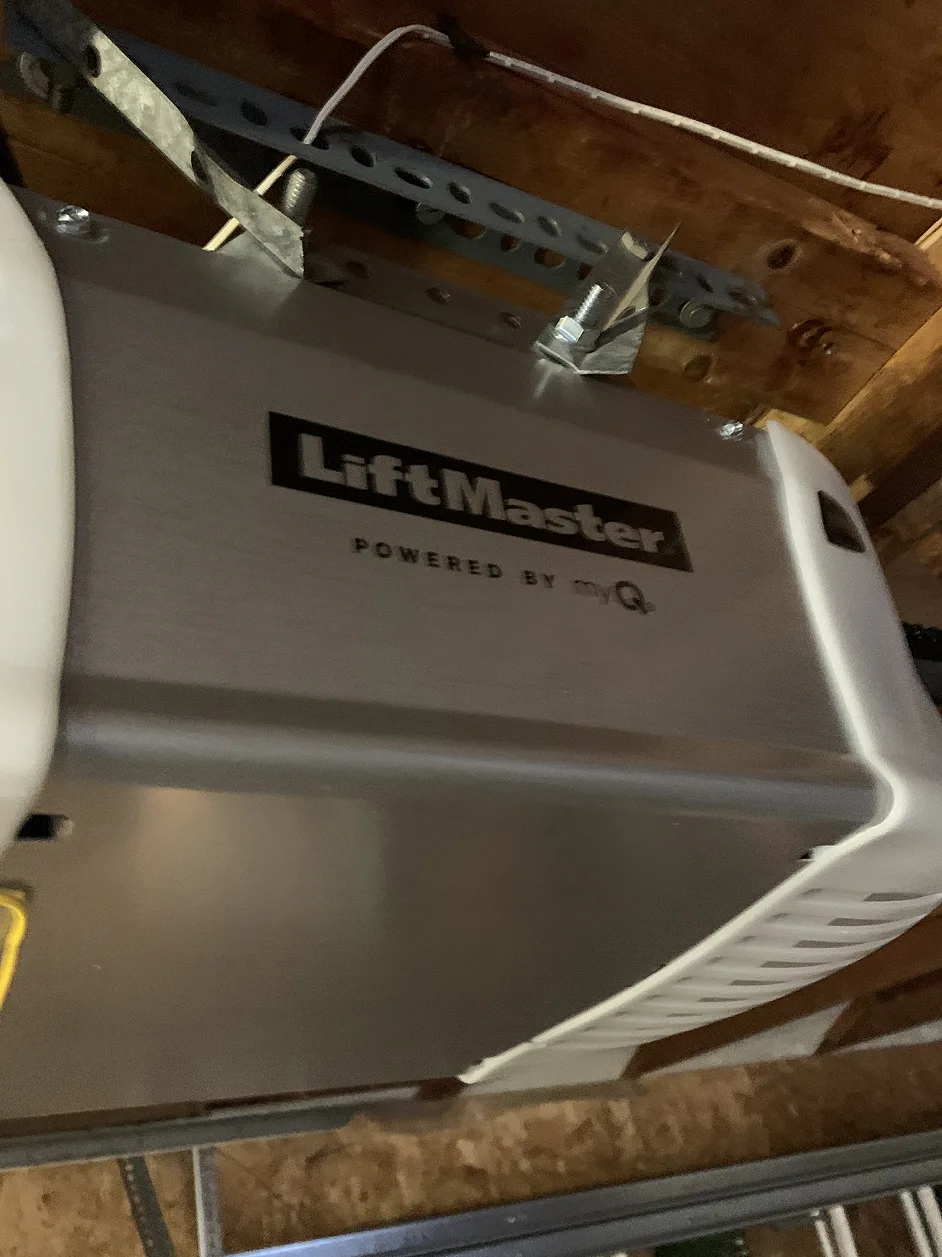
Older garage door openers use a fixed code that a device called a code grabber can capture and replay to open the door. Rolling code technology, which is standard on most openers manufactured after the mid-1990s, generates a new code with every use. Opener safety and entrapment protection for products sold in Canada fall under the binational ANSI/CAN/UL 325 standard, which also covers newer features like app and timer-controlled access.
If your opener is more than 15 years old, it may still use a fixed code. Replacing it with a current rolling code model removes this vulnerability entirely. Our garage door opener replacement service covers opener upgrades for Toronto homes.
Install a Garage Door Lock or Slide Lock
Most garage doors can be fitted with a dedicated slide lock or T-handle lock that physically prevents the door from being lifted even if the opener is bypassed. These locks are particularly useful when you are away from home for an extended period, as they add a manual mechanical barrier that cannot be defeated without cutting through the door or frame.
Secure the Emergency Release Cord
The emergency release cord on a garage door opener is a known vulnerability. An intruder with a coat hanger or similar tool can reach through the top of the door frame, hook the red cord, and disengage the opener, allowing the door to be lifted manually. Fitting a zip tie through the release latch limits the travel of the cord so it can still be used from inside in a genuine emergency but cannot be triggered by a tool inserted from outside.
Cover or Frost Garage Door Windows
Windows in garage doors allow anyone outside to see whether a vehicle is present and to observe the interior layout of the garage. Frosted window film applied to the inside of the glass panels maintains the aesthetic of the window from the exterior while eliminating visibility into the garage.
Add a Garage Door Monitor or Smart Opener
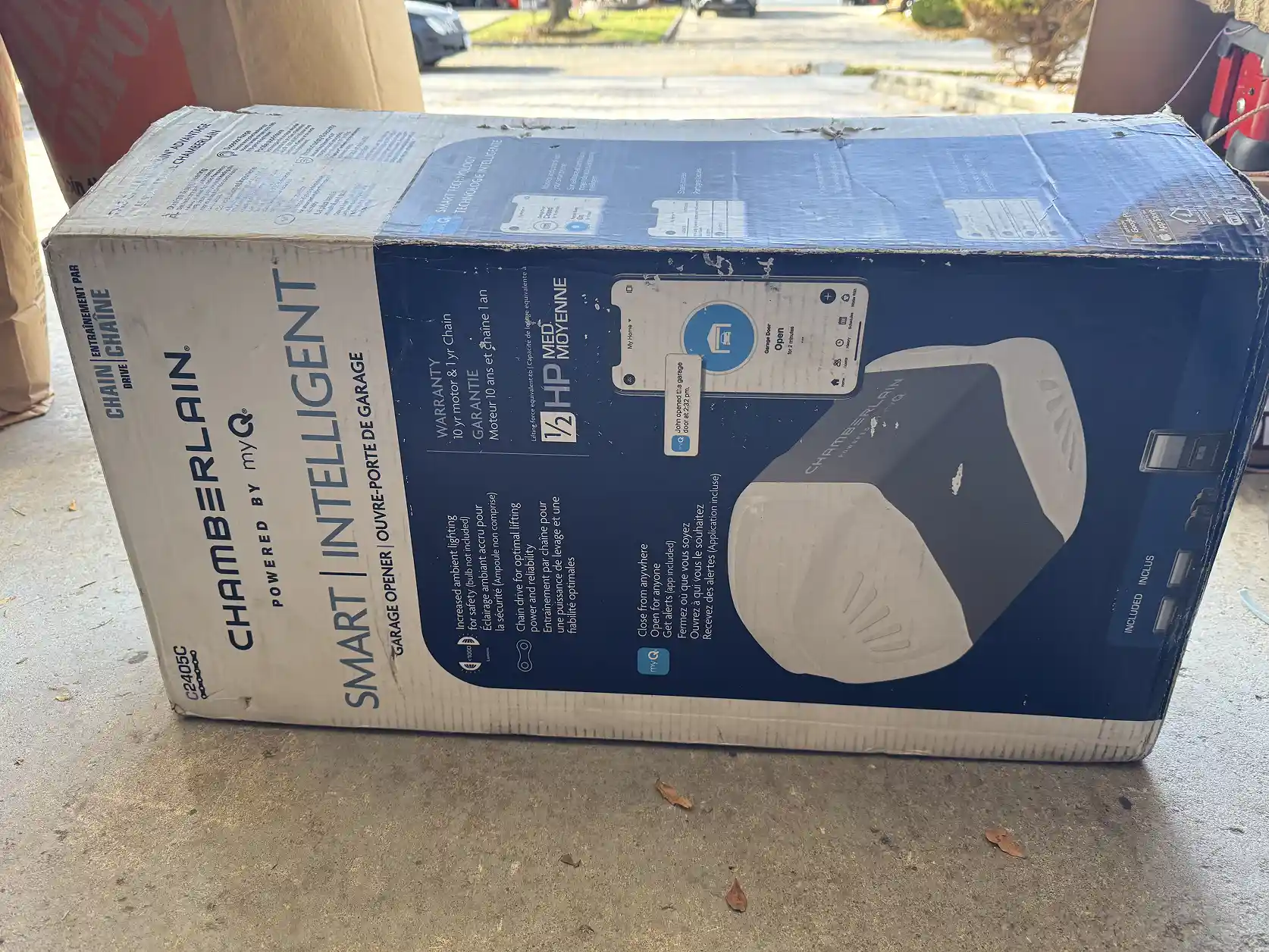
A smart garage door opener or a standalone garage door monitor connects to your smartphone and alerts you when the door is opened, closed, or left open for an extended period. Being able to check the status of the door remotely and close it from anywhere removes the risk of accidentally leaving it open. Our overview of smart garage doors covers the connectivity options available for Toronto homes.
Improve Lighting Around the Garage
Motion-activated lighting at the garage entrance reduces the cover that darkness provides. This reflects a broader principle Toronto Police calls Crime Prevention Through Environmental Design, which holds that how a property is lit, landscaped, and laid out directly affects how attractive it is to someone looking for an opportunity.
Keep the Door Between Garage and Home Locked
The interior door connecting an attached garage to the living space of the home should be treated as an exterior door. It should have a solid core, a deadbolt, and a latch that closes securely. This door is the last line of defence if the garage door itself is breached.
What Physical Hardware Upgrades Improve Garage Door Security?
Beyond the opener and locking mechanisms, several hardware upgrades address the physical vulnerability of the door panel and frame.
|
Upgrade |
What It Addresses |
Difficulty |
|
Rolling code opener |
Code capture and replay attacks |
Professional installation |
|
Slide lock or T-handle lock |
Manual lifting after opener bypass |
DIY or professional |
|
Emergency release shield |
Red cord fishing attack |
DIY |
|
Door reinforcement kit |
Forced entry through panel kick-in |
Professional |
|
Hinge and track reinforcement |
Track displacement attacks |
Professional |
|
Motion-activated lighting |
Cover of darkness |
DIY or professional |
|
Smart opener or monitor |
Door left open unintentionally |
DIY or professional |
For homeowners concerned about the condition of their existing door hardware, our garage door issues overview identifies the most common vulnerabilities and what professional inspection covers.
How Does Garage Door Maintenance Affect Security?
A garage door that is poorly maintained is easier to force open than one in good working condition. Worn springs, frayed cables, misaligned tracks, and damaged panels all reduce the structural resistance of the door to forced entry.
Springs that are weakened or near the end of their service life may not hold the door in the fully closed position under the tension required to resist manual lifting. Damaged or bent panels create gaps at the edges of the door that reduce the effectiveness of side seals and can be exploited to insert tools.
Scheduling annual or biannual professional maintenance keeps the door in the condition needed to perform both mechanically and as a security barrier. Our garage door maintenance checklist provides a practical inspection reference for Toronto homeowners between professional service visits.
What Are the Signs That a Garage Door Has a Security Vulnerability?
Some security weaknesses in a garage door are visible during a basic inspection. Others require a closer look at the hardware and technology involved.
- The opener predates rolling code technology: Any opener manufactured before approximately 1996 should be treated as potentially vulnerable to code capture. Check the manufacture date on the motor head unit.
- The door has visible gaps at the sides, top, or bottom when closed: Gaps indicate frame misalignment, seal deterioration, or panel warping. They reduce weather resistance and provide leverage points for forced entry.
- The door lifts manually with minimal resistance: A properly maintained garage door with functional springs should offer meaningful resistance to manual lifting from the outside. If the door lifts easily by hand, the springs or cables may be worn.
- The emergency release can be triggered from outside: Test this by observing whether there is sufficient clearance at the top corner of the door for a slender tool to reach the release cord. If so, the cord shield fix described above is worth applying.
- The door lacks a dedicated lock: An opener is not a lock. A door that can only be secured by the opener mechanism has no mechanical barrier if the opener is bypassed.
If you have identified concerns about your garage door’s condition or security, our expert team can arrange an assessment and provide recommendations specific to your door and property.
How Do Smart Garage Door Systems Improve Security?
Smart garage door technology adds a monitoring and control layer that addresses the human factors in garage door security: forgetting to close the door, not knowing whether it has been opened while you were away, and being unable to grant or revoke access remotely.
A smart opener connected to a smartphone app shows the door’s real-time status, logs open and close events with timestamps, sends alerts when the door is opened or left open beyond a set time, and allows remote operation from anywhere with a data connection. Some systems also support guest access, allowing you to open the door for a delivery or a visitor without sharing your main remote.
For a detailed overview of what smart garage door systems can do and which options are available for Toronto homes, our blog on smart garage door push notifications covers the alert and monitoring features in detail.
What Should Toronto Homeowners Do If They Suspect a Break-In Attempt?
If you find evidence that someone has attempted to access your garage, such as scratches near the top corner of the door frame, a displaced emergency release cord, or damage to the lock or panels, contact Toronto Police Service to report the attempt before touching anything.
After the report, have the door professionally inspected to confirm whether any structural or mechanical damage has occurred and whether the opener’s security has been compromised. Changing the opener access codes and remote pairings after a suspected code capture attempt is straightforward and should be done as a precaution.
Legacy Garage Doors provides assessment and repair services for doors that have sustained damage or that require security upgrades following a security concern. Contact Legacy Garage Doors to arrange a visit.
Frequently Asked Questions
1. What is the most important thing I can do to secure my garage door?
The single most effective step for most Toronto homeowners is confirming that the opener uses rolling code technology and replacing it if it does not. Fixed-code openers are vulnerable to code capture devices that allow an intruder to open the door without any physical contact. Our garage door opener replacement service covers rolling code upgrades for homes with older openers.
2. Can a garage door be opened without the remote?
Yes, through several methods. A code grabber can capture and replay the signal from a fixed-code remote. The emergency release cord can be triggered from outside the door using a long, thin tool inserted through the top corner of the frame. A door without a dedicated mechanical lock can also be lifted manually if the springs are weak or the opener is disengaged. Our overview of garage door security tips addresses each of these vulnerabilities.
3. Does a smart garage door opener make my home more secure?
A smart opener improves security in specific ways: it allows you to confirm and close a door left open accidentally, receive alerts when the door is activated unexpectedly, and log access events with timestamps. It does not replace physical security measures such as a dedicated door lock or rolling code technology, but it adds a monitoring layer that addresses the most common security gap, which is human error. Our blog on smart garage doors covers what these systems do and how they are installed.
4. How do I know if my garage door opener uses rolling code technology?
Check the manufacture date printed on the motor head unit mounted on the ceiling of your garage. Openers manufactured after approximately 1996 by major brands typically use rolling code technology. The product documentation or the label on the unit may also state ‘Security+’, ‘INTELLICODE’, or a similar brand-specific rolling code designation. If you are unsure, a Legacy Garage Doors technician can confirm the opener type during a service visit.
5. Is the door between my garage and house important for security?
Yes, and it is frequently overlooked. If an intruder gains access to your attached garage, the door between the garage and the home is their next obstacle. That door should have a solid core construction, a functioning deadbolt, and a self-closing mechanism if possible. It should never be left unlocked, even when the garage door is closed. For general guidance on keeping your household safe, our family safety overview includes practical recommendations for attached garages.
6. How often should I have my garage door inspected for security issues?
A professional inspection once per year is sufficient for most Toronto homeowners. The inspection should cover spring and cable condition, opener functionality and code type, the integrity of the door panels and frame, and the condition of all seals and locks. A door that shows visible signs of wear, damage, or misalignment should be inspected sooner. Our garage door maintenance checklist covers what to look for between professional visits.
Keep Your Garage and Home Secure
Legacy Garage Doors helps Toronto and GTA homeowners assess and address garage door security vulnerabilities through opener upgrades, hardware installation, and professional maintenance. Contact Legacy Garage Doors to arrange an assessment or discuss security upgrades for your home.
Key Takeaways
- The garage is one of the most commonly targeted entry points in residential break-ins, and attached garages give intruders direct access to the home interior if breached.
- The most impactful single upgrade for most homes is replacing a fixed-code opener with a rolling code model, which eliminates the code capture vulnerability.
- The emergency release cord can be triggered from outside the door by a tool inserted through the top frame gap. A zip tie through the release latch limits this without affecting emergency use from inside.
- Smart openers add a monitoring and control layer that addresses the most common garage security gap: doors left open unintentionally or activated without the homeowner’s knowledge.
- A well-maintained door is harder to force open than a worn one. Spring, cable, panel, and seal condition all affect the door’s resistance to manual entry.
- The interior door between an attached garage and the home should be treated as an exterior door and kept locked at all times.