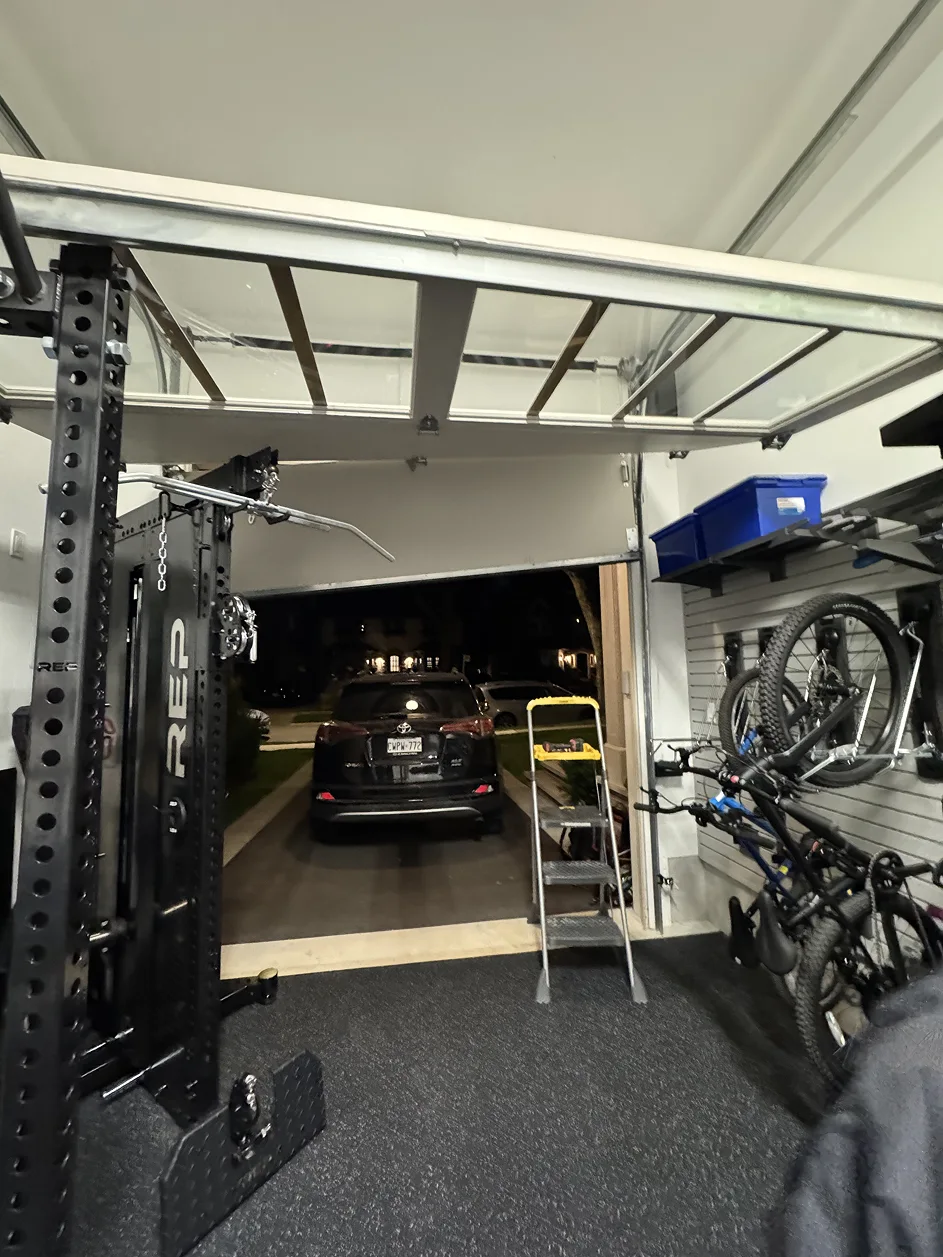

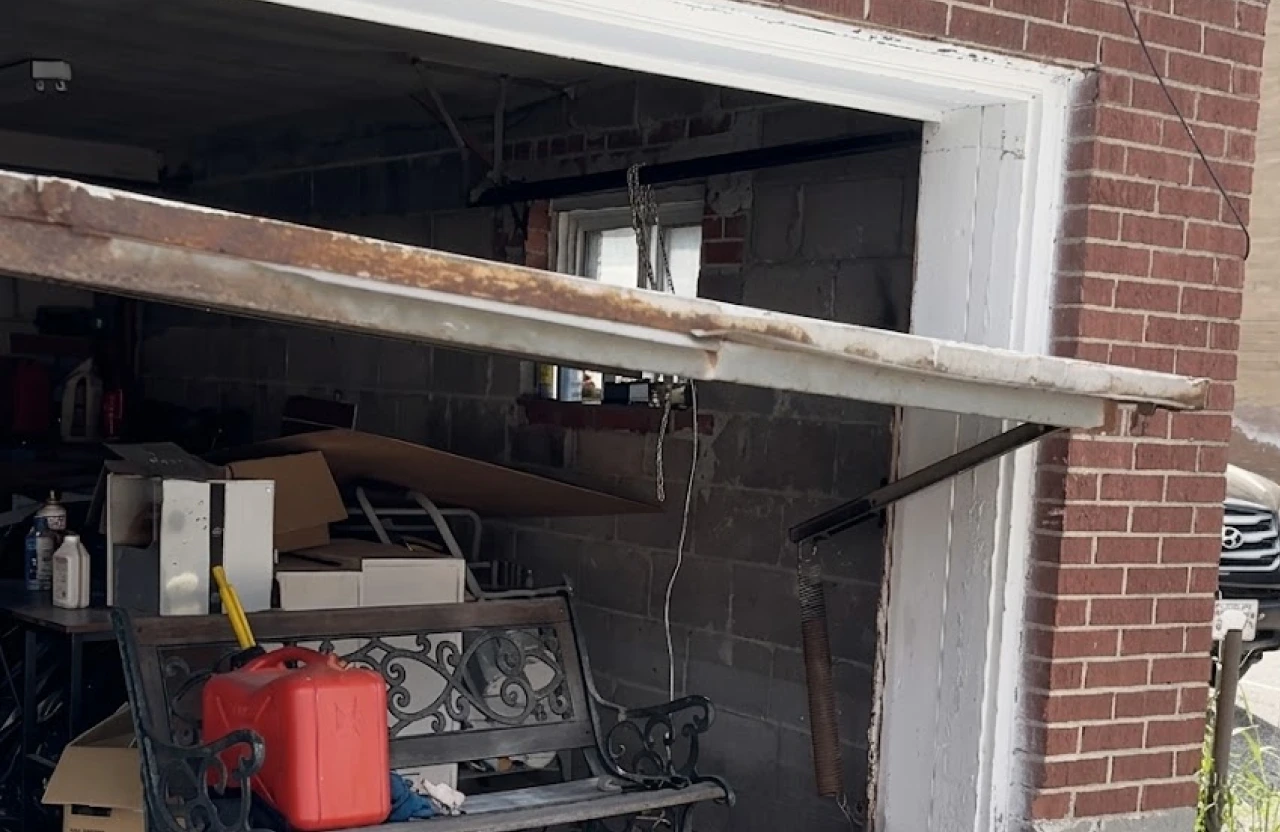
A snapped garage door cable is a mechanical failure that makes the door unsafe to operate and requires professional repair before the door is used again. The cables on a garage door work in tandem with the torsion or extension springs to control the door’s movement and bear its weight. Legacy Garage Doors repairs broken garage door cables for residential and commercial properties across Toronto and the GTA, typically on the same day.
What Does the Cable on a Garage Door Actually Do?
The cables on a garage door are steel wire ropes that connect the bottom corners of the door to the spring system and winding drum above. They work as part of a mechanical system that transfers the stored energy in the springs into controlled, balanced movement of the door as it opens and closes.
On a torsion spring system, which is the standard configuration for most residential garage doors in Canada, the cables wrap around drums mounted at each end of the torsion bar above the door opening. When the door closes, the springs wind and store tension. When the door opens, the springs unwind and the cables carry that force to lift the door panels. The cables bear a significant portion of the door’s weight throughout the full range of travel.
On an extension spring system, used on older or lighter doors, the cables run from the bottom corners of the door through pulleys at the back of the horizontal track and connect to the springs. In this configuration the cables carry the door’s weight directly as the springs extend and retract.
Understanding what the cables do explains why a snapped cable makes the door immediately unsafe to use. Our overview of garage door issues covers the most common mechanical failures affecting residential and commercial doors in the GTA.
What Happens When a Garage Door Cable Snaps?
When one cable snaps, the door loses balanced support on that side. Several outcomes are possible depending on the door’s position and the condition of the remaining hardware when the failure occurs.
- If the door is closed when the cable snaps, the door may remain in the closed position but will be noticeably uneven. One corner will sit lower than the other, and the door may bind against the frame or track on the failed side.
- If the door is open or mid-travel when the cable snaps, the door can drop suddenly and unevenly, creating a serious risk of injury to anyone beneath it or within reach of the falling panel. A door that drops under these conditions can also damage the track, the opener trolley, the floor below, or any vehicle parked in the opening.
- If both cables fail simultaneously, which is rare but can occur on severely neglected systems, the full weight of the door is no longer supported and the door will fall.
In all cases, a door with a snapped cable should not be operated manually or with the opener until the cable has been professionally replaced. Attempting to force the door open or closed with a failed cable can worsen the damage and significantly increase the safety risk.
What Causes a Garage Door Cable to Snap?
Garage door cables do not fail randomly. Snap failures are almost always the result of one or more identifiable causes that develop over time.
|
Cause |
How It Leads to Cable Failure |
Preventable With Maintenance? |
|
Normal wear and fatigue |
Steel cables fatigue and fray over years of high-cycle use |
Yes, regular inspection catches fraying early |
|
Corrosion |
Rust weakens individual wire strands until the cable can no longer hold the load |
Yes, lubrication and moisture control extend cable life |
|
Improper cable tension |
Over-tensioned cables are under constant excess stress and fail sooner |
Yes, professional spring adjustment prevents this |
|
Spring failure |
When a spring breaks, the cable absorbs the full door weight it was never rated to bear alone |
Partially, spring inspection reduces spring failure risk |
|
Cable drum misalignment |
A misaligned drum causes uneven cable winding that creates friction and accelerated wear at specific points |
Yes, track and drum alignment checks catch this |
|
Extreme cold weather |
Frozen or stiffened cables experience higher stress during operation in Toronto winters |
Partially, lubricating cables before winter helps |
Most cable failures are preceded by visible warning signs that are caught during routine maintenance. Our garage door maintenance checklist covers cable inspection as part of the standard annual and biannual service routine.
What Are the Warning Signs That a Garage Door Cable Is About to Fail?
A cable rarely snaps without warning. Catching the early signs of cable deterioration allows homeowners to schedule a repair before the cable fails completely.
- Visible fraying or broken wire strands: The cable surface shows individual wire strands that have separated from the main cable body. Even a small amount of fraying is a sign that the cable should be replaced before it fails completely. OSHA’s wire rope inspection standard treats visible broken wires and significant corrosion as serious deficiencies that require a wire rope to be taken out of service, which reflects the same principle that applies to garage door cables.
- Rust or discolouration on the cable surface: Surface rust weakens the individual strands over time. A cable that shows significant rust should be inspected by a technician and replaced if the corrosion has compromised the wire.
- Uneven door travel: If the door rises or lowers unevenly, CPSC guidance on garage door safety notes that a properly operating door should stay “balanced” in any partially open position, and a door that doesn’t should be serviced by a professional.
- Slack or loose cable: A cable that hangs loosely when the door is closed indicates that it has lost tension or has jumped off the drum. This is not yet a snap failure but it puts the remaining cable under increased stress and should be addressed promptly.
- Grinding or scraping sounds: Cable-related noises often originate from fraying strands catching on the drum or from a cable that is rubbing against a track bracket.
If you have noticed any of these signs, do not wait for the cable to snap. Contact Legacy Garage Doors to schedule a cable inspection and repair before a partial failure becomes a complete one.
Is It Safe to Use a Garage Door With a Snapped Cable?
No. A garage door with a snapped cable should not be used under any circumstances until the cable is replaced by a qualified technician. This applies to both manual operation and motorised operation using the opener. DASMA’s safety guidance for garage door systems specifically warns that cables attach to a spring system under high tension, and that due to the dangers involved, they should be replaced only by a trained technician. This applies to both manual operation and motorised operation using the opener.
Operating the door with a failed cable places the full load of the door’s weight on the remaining cable and on the spring system in a way that neither component is designed to handle alone. The remaining cable is under significantly higher stress than normal and may fail in the same operation cycle. The door can drop suddenly, and the opener trolley or carriage can sustain damage that extends the scope and cost of the repair.
If the door is in the open position when the cable snaps and you need to secure the garage, contact a professional immediately rather than attempting to lower the door manually. Legacy Garage Doors provides same-day and emergency service across Toronto and the GTA.
How Is a Snapped Garage Door Cable Repaired?
Garage door cable replacement is a professional repair. It involves releasing the spring tension safely before disconnecting the failed cable, threading and securing the new cable through the bottom bracket and around the drum, re-tensioning the spring system to the correct specification, and testing the door through its full range of travel to confirm balanced and smooth operation.
The spring tension release step is the reason cable repair is not a safe DIY task. Torsion springs on a standard double-car residential garage door store a significant amount of mechanical energy. Releasing that tension without the correct winding bars and the knowledge to handle the procedure safely creates a serious risk of injury. The spring can snap or the winding cone can slip, releasing that energy suddenly.
Our technicians carry the tools and replacement cable inventory to complete most cable repairs in a single visit. For context on why professional service is recommended for this type of repair, our overview of the dangers of DIY garage door repair explains the specific risks involved with spring and cable work.
Should Both Cables Be Replaced at the Same Time?
Yes, and this is the recommendation that Legacy Garage Doors makes to every client with a cable failure. Garage door cables are installed at the same time and accumulate the same number of cycles under the same conditions throughout their service life. If one cable has failed due to wear or fatigue, the other cable is typically at or near the same point in its service life.
Replacing only the failed cable leaves the second cable at high risk of failing in the near future, requiring another service call and a repeat of the labour involved. Replacing both cables in the same visit is more economical overall and eliminates the risk of a second unplanned failure.
The same logic applies to springs. If a spring failure contributed to the cable snap, both springs should be inspected and replaced together. Our overview of garage door spring repair covers the spring and cable relationship in the context of Toronto garage door repairs.
What Does Garage Door Cable Repair Cost in Toronto?
Cable replacement in Toronto typically runs between $150 and $350 for a standard residential door, depending on the cable type, whether both cables are being replaced, and whether any related hardware such as drums, brackets, or springs also requires attention.
If a spring failure caused or contributed to the cable snap, the spring replacement adds to the cost. A single torsion spring replacement runs approximately $200 to $450 in the GTA. Replacing both springs and both cables in the same visit is the most cost-effective approach when the full system is at or near end of service life.
Legacy Garage Doors provides upfront pricing before any work begins. There are no hidden fees added after the fact. Contact our expert team to get a quote for cable repair or replacement at your property.
Frequently Asked Questions
1. What should I do immediately if my garage door cable snaps?
Stop using the door immediately. Do not attempt to open or close it manually or with the opener. If the door is in the open position, do not drive a vehicle under it. Secure the area and contact a qualified garage door technician for same-day service. Legacy Garage Doors provides emergency and same-day cable repair across Toronto and the GTA. Contact our expert team to arrange a visit.
2. How long does a garage door cable last?
A garage door cable on a well-maintained residential door typically lasts 8 to 15 years, depending on the number of daily cycles, the climate, and how regularly the cable is lubricated and inspected. High-cycle environments and exposure to moisture or road salt shorten that range. Regular professional maintenance, including cable inspection, extends service life and catches fraying before it leads to a snap failure. Our garage door maintenance checklist covers cable inspection intervals.
3. Can I replace a garage door cable myself?
Cable replacement requires releasing the tension stored in the torsion spring system, which poses a serious injury risk without the correct tools and training. Most garage door manufacturers and safety organisations advise against DIY cable replacement for this reason. The cost saving relative to professional service is minimal, and the risk is significant. Our overview of the dangers of DIY garage door repair explains why spring and cable work specifically should be handled by a qualified technician.
4. Why did my garage door cable snap after my spring broke?
When a torsion or extension spring breaks, the counterbalance system that makes the door effectively weightless for the opener and cables is lost. The cables then bear the full weight of the door in a way they are not rated to handle alone, and the sudden load increase can snap one or both cables in the same event. This is why spring and cable failures often occur together. Our garage door spring repair overview explains the spring and cable relationship and what a complete repair involves.
5. How can I tell if my garage door cable is fraying before it snaps?
Inspect the cables visually with the door in the closed position. Look for individual wire strands that have separated from the main cable body, surface rust or discoloration along the cable length, kinks or bends in the cable near the drum or bottom bracket, and any point where the cable appears thinner than the rest of its length. If you see any of these signs, schedule a cable inspection promptly rather than waiting for a complete failure.
6. Does a snapped cable void my garage door warranty?
Most garage door warranties cover defects in the door panels and hardware but do not cover cable failures resulting from normal wear, lack of maintenance, or spring failure. Review the warranty documentation that came with your door for the specific terms. Legacy Garage Doors can advise on whether a cable failure in your specific situation is likely to fall within or outside standard warranty coverage. Our garage door warranty overview provides useful context on what GTA homeowners should know about door and component warranties.
Get Your Garage Door Cable Repaired Today
Legacy Garage Doors provides same-day and emergency garage door cable repair for residential and commercial properties across Toronto, Scarborough, Markham, Vaughan, Mississauga, and the broader GTA. Upfront pricing, no hidden fees, and guaranteed workmanship on every repair. Contact Legacy Garage Doors to arrange a visit or get a quote.
Key Takeaways
- The cables on a garage door work with the spring system to bear the door’s weight and control its movement through the full range of travel.
- A snapped cable makes the door immediately unsafe to use. Do not operate the door manually or with the opener until the cable is professionally replaced.
- The most common causes of cable failure are wear and fatigue, corrosion, spring failure that overloads the cable, and drum misalignment.
- Both cables should be replaced at the same time when one fails, as both have accumulated the same wear and the second cable is at high risk of failing shortly after.
- Cable replacement requires releasing torsion spring tension, which is a serious safety risk without the correct tools and training. Professional repair is strongly recommended.
- Legacy Garage Doors provides same-day cable repair across Toronto, Scarborough, Markham, Vaughan, Mississauga, and the broader GTA with upfront pricing and no hidden fees.